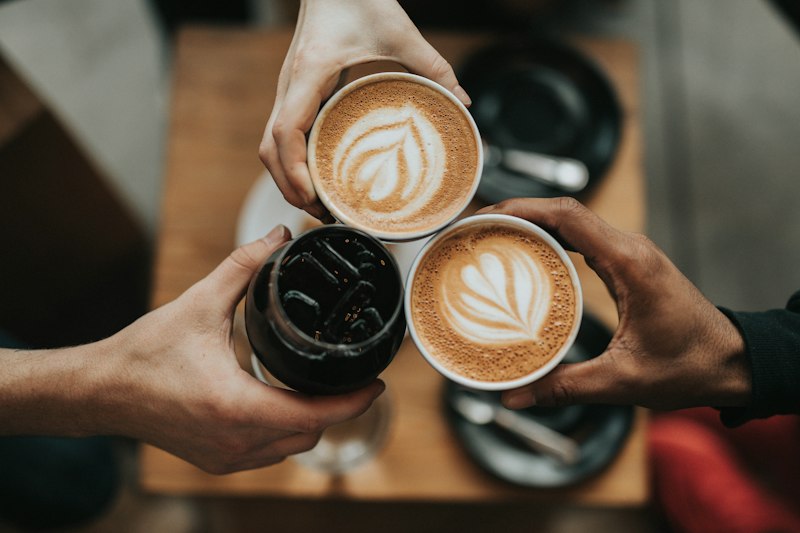
We're a matcha brand, so you might expect us to say matcha wins. The truth is more nuanced — and more useful. Here's an honest breakdown of when each one is the right choice.
The Honest Answer
We make matcha. We believe in it. But we also believe in evidence — and the evidence says that coffee and matcha serve different neurological and physiological purposes. The question isn't which is better. It's which is better for what you're trying to do.
Caffeine: Quantity vs. Quality
Coffee delivers 95–200mg of caffeine per 240ml cup. Miru Matcha delivers 30–70mg per 2g serving. On raw caffeine content, coffee wins — if maximum stimulation is the goal.
But caffeine quantity isn't the only variable. The rate of absorption, the co-factors present, and the duration of effect all matter. L-theanine in matcha slows caffeine absorption and modulates its effect on the central nervous system, producing a longer, smoother energy curve with a significantly lower cortisol response.
Cortisol: The Hidden Cost of Coffee
Cortisol is your body's primary stress hormone. High-dose caffeine — particularly on an empty stomach — triggers a cortisol spike that can contribute to anxiety, disrupted sleep, and over time, adrenal fatigue. This is why many heavy coffee drinkers report feeling "wired but tired."
Matcha's L-theanine directly counteracts this mechanism. Studies show that L-theanine reduces salivary cortisol response to stress by up to 15% compared to placebo. For people who are cortisol-sensitive (common in high-stress professions), this difference is clinically meaningful.
When Coffee Wins
Coffee is the right choice when:
You need maximum short-term arousal (competitive sport, night shift, emergency situations)
You're performing a task that benefits from high arousal states (physical labour, repetitive tasks)
You're caffeine-tolerant and the cortisol response doesn't affect you
When Matcha Wins
Matcha is the right choice when:
You need sustained focus for 4–6 hours (deep work, creative projects, studying)
You're anxiety-prone or cortisol-sensitive
You want cognitive performance without the post-caffeine crash
You're exercising at moderate intensity and want to optimise fat oxidation
You want the antioxidant and metabolic benefits of EGCG alongside your caffeine
The Practical Recommendation
For most knowledge workers and performance-focused individuals, the optimal protocol is:
Morning (6–9am): Miru Matcha — smooth, sustained energy for the first deep work block without cortisol disruption.
Pre-workout (if needed): Either works. Matcha's fat oxidation benefits are strongest at moderate exercise intensities.
Afternoon (if needed): Matcha again — the lower caffeine dose means less sleep disruption than a 3pm coffee.
High-intensity situations: Coffee, if you need the extra stimulation.
This isn't anti-coffee. It's pro-matching-the-tool-to-the-task.
Miru Research Team
Evidence-based articles on matcha, performance, and the science of daily ritual.